Notes on what is kept, what is passed down, and what quietly shapes a home.
From the Journal
The Lost Art of Becoming Together
Twenty years in. Still a work in progress.
It stopped me mid-scroll.
Not because it was new—
but because it named something I’ve known for a long time
without ever quite calling it anything.
There’s a way people talk about dating now that feels… finished.
Profiles that read like resumes.
Lives presented like they’re already fully formed.
Edges sanded down. Stories pre-approved.
As if the goal is to arrive complete—
and then be selected for it.
It makes sense.
It’s efficient.
It’s controlled.
It keeps things from getting too messy.
But that’s not how a life gets built.
That’s how you avoid one.
My husband and I have been together twenty years now.
Half my life.
Long enough that who I am
isn’t entirely separate from who I’ve been with.
Not absorbed.
Not erased.
But shaped.
And there was never a version of either of us
that would have qualified as “ready.”
Not financially.
Not emotionally.
Definitely not in the ways that look good on paper.
We were just…in motion.
And somewhere in the middle of that—
with no real guarantee it would work—
we chose to keep moving in the same direction.
Not always well.
Not always at the same pace.
Sometimes one of us carrying more than the other.
Sometimes getting it wrong in ways
you don’t get to undo.
But enough.
That’s the part people don’t like to say out loud.
Building something with someone
means you don’t always get the better version of them.
Sometimes you get the tired one.
The distracted one.
The version that hasn’t figured themselves out yet.
And sometimes—
you’re that version for them.
And you stay anyway.
Not blindly.
Not without friction.
But with the understanding
that you’re not choosing a finished person—
you’re choosing the long middle.
It’s not about finding someone incomplete
and hoping they turn into something better.
That’s not romantic.
That’s a bet most people lose.
It’s about recognizing someone who’s already becoming—
and deciding they’re worth building with.
Even when it’s slower than you’d like.
Even when it’s harder than it should be.
Because if you wait for someone fully formed—
perfectly certain,
already established in every way that feels safe—
you might find them.
But you won’t get to say:
this version of me exists because we built it together.
You’ll just inherit each other
as-is.
We’re twenty years in,
and still—nothing about it feels finished.
One Season Ahead
On raising the for what’s next without rushing them out of what is.
There are moments in parenting when you hand over something that feels just a little too big.
A real glass instead of the plastic one.
The house key.
The sharp kitchen knife.
The first time they answer the door, greet a guest, or carry a plate to the table without you hovering close behind.
You watch from the edges, trying to look calmer than you feel.
Because if you’re honest, you’re not entirely sure they’re ready.
Then again, you’re not entirely sure you are either.
I’ve started wondering if part of raising children is learning to live just one season ahead of them.
Not rushing them. God knows I don’t want to rush them. Childhood seems determined to do that all on its own.
But quietly putting the next thing within reach. Giving them a little more responsibility than yesterday required. Trusting them with something they haven’t entirely proven they can handle yet, and watching what happens.
Sometimes they rise to it.
Sometimes they remind you quite convincingly that they are still seven.
Both, I think, are part of it.
This summer, I have felt the seasons changing everywhere I look.
My eldest seems to be standing right on the edge of true boyhood now. He grew what feels like three inches in a matter of weeks. There are gaps where baby teeth used to be. He ties his own shoelaces. He makes eggs at the stove. So many of the little accommodations of early childhood have quietly disappeared without anyone announcing their departure.
There was no last time I tied his shoes that I can remember.
That’s the trouble with childhood. So much of it ends without telling you it’s ending.
My middle started kindergarten this week.
I put him in his uniform and suddenly there was a schoolboy standing where my little kid had been. His vocabulary seems to be growing by the hour. He informs us when he is being antagonized. He asks me to quiz him on math for fun.
And then there is my little, who has left babyhood with considerably less ceremony.
He is a true chunky toddler now, moving through the house with the confidence of someone who owns it. He steals markers, draws on the walls as fast as his little hand will move, and takes off running the second he realizes you’ve caught wind of the operation.
None of these changes happened neatly.
They arrived fast and clunky.
A boy who can cook his own breakfast but still needs his mother.
A kindergartener using four-syllable words who is still small enough to crawl into my lap.
A baby becoming a toddler with a marker clenched in his fist.
Maybe that’s why it’s so difficult to know when they’re ready for the next thing. Childhood doesn’t give us clean edges. There is no morning when one season ends and another politely begins.
For a while, they are both.
And I suppose we are too.
One of the strangest parts of motherhood is that I am always pulling in two directions.
I want to keep this version of them.
I also want to prepare them for the one who is coming.
I want to stop and smell every rose, while somehow remembering to plant the garden they’ll need next year.
Those instincts can feel contradictory. We are constantly told not to rush childhood, and I believe that deeply. I don’t want miniature adults sitting around my dinner table. I want grubby knees and ridiculous jokes and boys who occasionally forget where they left their shoes.
But I also don’t want the next season to arrive and find them completely unprepared for it.
So I’ve started thinking of my job as staying one season ahead.
Not five seasons. Not dragging summer into spring.
Just one.
Close enough to see what’s coming.
This summer, without quite realizing it at first, we’ve been practicing some of this.
We’ve practiced how to host people before anyone expects them to be hosts. How to introduce two people who don’t know each other. How to notice what needs doing and leave a place better than we found it. How to lose graciously, make something useful, earn money, set a table.
Tiny rehearsals for a life they aren’t living yet.
And then there are the quieter promotions that happen without a lesson attached.
Walking into the bakery alone.
Using the stove.
Carrying something breakable.
Being trusted with a real tool.
Or, against my better judgment, a pocket knife.
The pocket knife may be the clearest example because I wasn’t entirely convinced either of us was ready for it.
But that’s the thing I’ve begun to understand about readiness.
We tend to think competence should come first and responsibility second. Show me you can handle it, and then I’ll trust you with it.
Childhood seems to work the other way around surprisingly often.
Sometimes responsibility is the thing that calls competence forward.
You hand them something slightly bigger than the child they were yesterday, and they straighten a little under its weight.
Not always. Sometimes you take the marker away and wash the wall.
But often enough, they surprise you.
Maybe staying one season ahead isn’t really about pushing them forward at all.
Maybe it’s about noticing.
Noticing the missing tooth. The shoelace tied without help. The word you didn’t know they knew. The suddenly long legs sticking out beneath the school uniform.
Seeing the next season beginning before the last one has entirely left.
And making a little room for it.
I don’t want to rush childhood.
I want to be present enough to recognize when it is already moving.
To linger where we are, certainly. To smell the roses. To let them be little and silly and completely unfinished.
But also to notice the buds forming for whatever comes next.
Because the seasons arrive whether I’m ready for them or not.
This summer, apparently, all three of my boys decided to change at once.
Fast and clunky and right in front of me.
So I’m trying to do both.
Keep one eye on the season ahead.
And both feet firmly planted in this one — even while someone is yelling from the other room that they are, in fact, being antagonized.
The Quiet Promotion of Naughty Words
Every family has an accent.
Every house develops its own language eventually.
If I’m being honest, there are a fair number of colorful words flying around our house.
Not the serious ones. My boys are still seven, five, and one, and there are a few linguistic heavyweights that are firmly reserved for adulthood.
But we do allow a couple milder expressions.
H-E double hockey sticks.
Shaiza.
They’re allowed to say them.
There isn’t even really a limit on how often.
The real lesson isn’t about the words themselves.
It’s about where they belong.
At home? Usually fine.
Within earshot of Mom or Dad? Acceptable.
Around a trusted friend who thinks it’s hilarious? Generally permitted.
But not in front of teachers.
Not in front of grandparents.
Not at school.
And certainly never directed at another person.
Because in our house the rule about language is fairly simple:
You may play with words.
You may not use them to hurt someone.
Now, to be clear, my husband and I run the full gamut of grown-up language when the situation calls for it — which, if we’re being honest, is most days.
But the boys understand those are adult words.
The linguistic equivalent of the top shelf.
Children understand this arrangement much better than people give them credit for.
Once they realize they’re trusted with the responsibility, the thrill becomes less about rebellion and more about performance.
A dramatic “Oh H-E double hockey sticks!” when a Lego tower collapses.
A whispered “Shaiza…” when a board game takes a turn for the worse.
Or the time one brother confidently announced he would “keep an eye on the baby,” only to look up moments later and shout —
“HOLY SHAIZA!”
—as he realized the baby had quietly made it almost all the way to the top of the stairs.
Like any household, we’ve also developed a few sayings that only make sense inside these walls.
One of them is the old standby:
“Bend over and I’ll show ya.”
It’s not actually a threat of anything in particular. It’s simply the family shorthand for watch it, buddy when someone is getting a little too bold with their commentary.
The funny thing about allowing these smaller words a place to exist is that they lose most of their power.
They stop being forbidden treasure.
They become… words.
Which is probably for the best.
Because pretending children won’t eventually hear colorful language has never worked in the history of childhood.
So instead we’re teaching something a little more useful.
That words, like most things in life, depend entirely on the room you’re standing in.
And learning to read the room…
is the closest thing to a real promotion you’re going to get around here.
Besides, around our house we’ve always believed that if a colorful word must be used…
it might as well be used poetically.
The Lemonade Stand
A Social School
The lemonade stand may be the smallest school in the neighborhood.
It appears on a warm afternoon assembled from whatever is around — a folding table dragged from the garage, a cheerful tablecloth, a slightly crooked sign written in marker by someone who believes spelling is more of a suggestion than a rule.
A parent is usually nearby.
Not running things.
Just orbiting.
Seated in a folding chair with a coffee acting as quiet lifeguard rather than management.
From a distance it looks like play.
But if you linger for a few minutes, you start to notice something else entirely.
The lemonade stand is a kind of social school.
Behind that little table children are learning how the world works — not the tidy version we hand them in books, but the real one.
They learn how to greet strangers.
They learn how to look someone in the eye and say hello without immediately hiding behind their mother’s leg.
They learn that some people stop and chat.
Some buy something out of kindness.
And some walk right past without so much as a glance.
All of it perfectly normal.
All of it educational.
There is math involved too, though no one calls it that.
Coins clink into jars.
Bills are examined with the seriousness of a Wall Street audit.
Change is counted slowly.
Usually wrong the first time.
At some point a cookie will be given away for free — either out of generosity or confusion.
Profit margins are not the priority.
But confidence is.
Standing behind that table is a small act of courage for a child.
You’re offering something to the world — lemonade, cookies, cocoa, whatever the season allows — and asking if anyone might like some.
Sometimes the answer is yes.
Sometimes the answer is no.
Both are survivable.
In a childhood increasingly filled with organized sports, scheduled playdates, and carefully supervised activities, the lemonade stand feels almost rebellious in its simplicity.
No uniforms.
No referees.
No enrollment forms.
Just a table, a hand-written sign, and the unpredictable business of dealing with other human beings.
In our neighborhood the stand even shifts with the seasons.
Summer brings lemonade and melting ice.
Winter — or what passes for winter here — brings cookies and cocoa, served from paper cups with the seriousness of a Paris café.
The menu changes.
But the institution remains the same.
A handful of children learning how to speak to strangers, count money, recover from small disappointments, and occasionally negotiate the price of a cookie like seasoned street vendors.
It may look like a cute neighborhood tradition.
But moments like this are doing quiet work.
Because most of what matters about being human is learned in very small places.
Sometimes that place is a folding table with a crooked sign and a jar of coins.
And if the lemonade happens to be good, all the better.
Birthday Promotion
Every birthday comes with a promotion.
Some ideas don’t feel new—just named.
Every year, on her daughter’s birthday,
she gives her two things.
A new responsibility.
And a new privilege.
Not a list. Not a shift in expectations across the board.
Just one of each.
It was simple.
Make your bed every morning—
without being asked.
And in return,
you get to choose your own drink size.
Not guided. Not corrected.
Just…decided.
It’s just a drink.
Until it’s not.
It’s the first time no one steps in
to say that’s too much
or you won’t finish that
or are you sure?
It’s the quiet moment
where they start listening
to something internal
instead of looking around the room.
We talk a lot about giving kids responsibility.
Less about giving them space
to decide what to do with it.
What I liked about it—
what stayed with me—
was the balance.
Nothing inflated.
Nothing withheld.
Just a small shift in each direction.
You carry a little more.
You get to choose a little more.
And it happens on a birthday.
Not because it’s convenient,
but because it makes something invisible
feel marked.
You’re not just older.
You’ve moved.
There’s something about that
that feels right.
Not a reward.
Not a consequence.
A recognition.
A quiet promotion.
I’ve been turning it over since.
Not how to do it—
just where it’s already happening, without us noticing.
Fais Do-Do
The tiny hours after bedtime
There’s a season of marriage that doesn’t look like what anyone sells you.
Not the early one, where you go out too late and sleep in too long and think you’ll always be that version of yourselves.
And not the far-off one, where the house is quiet again in a different way.
This one sits right in the middle.
The years where the house is full and loud and someone always needs something. Where the days are accounted for before they even begin, and by the time the last light clicks off, you’re not wondering what to do with the night—
you’re wondering how much of it you can survive.
You tell yourselves you should go on a date.
You talk about it in passing, like responsible adults.
“We need to get out more.”
“We haven’t had a night to ourselves in a while.”
And you mean it.
But then the evening comes and the idea of getting dressed, leaving the house, making a reservation, speaking in full sentences to other adults—
it feels like a performance you no longer have the energy to give.
So instead, you stay.
And somewhere along the way, without really deciding to, you start building something else.
Small dates.
Unofficial ones.
The kind no one photographs.
A trip to Costco, just the two of you, walking the aisles a little slower than usual. Not because you need anything in particular, but because for a moment no one is asking you for anything at all.
You split up and meet back by the produce like it’s some kind of rendezvous.
You circle back for something you forgot and neither of you minds.
You debate olive oil like it matters more than it does.
You linger.
At night, after the house finally settles, you sit down next to each other and watch your shows.
My husband wants something cinematic. Slow, deliberate, a little dangerous—something that feels like it could’ve been made by Tarantino on a quiet day.
You want Bravo. Or, if the night calls for it, The Great British Bake Off—which, in your opinion, counts as emotional regulation.
And somehow, you watch both.
There might be a cocktail.
There is almost always a cookie.
No one is dressed for company.
No one is trying to impress anyone.
You’re just there.
Together.
In Louisiana, they have a phrase—fais do-do.
It started as something parents would tell their children.
Go to sleep.
So the adults could stay up.
Music playing, drinks poured, life continuing just a little longer after the children had closed their eyes.
It wasn’t elaborate.
It wasn’t curated.
It was just… theirs.
That’s what this feels like.
Not a night out.
Not a grand effort to “keep the spark alive.”
Just a quiet, stubborn refusal to let the day take everything.
Because the truth is—
this version of love isn’t built in the big gestures right now.
It’s built in the decision to sit down, even when you’re tired.
To stay up a little longer, even when you could go straight to bed.
To share something small and unremarkable and let it count anyway.
It’s not glamorous.
But neither is anything that lasts.
Fais do-do.
Let the kids go to sleep.
We’ll pour something we didn’t measure, sit a little too long, and call it a night we “should probably do more often.”
We won’t, of course.
Not consistently.
There will be days where we pass each other like coworkers on different shifts.
Where the only thing we share is a calendar and whatever’s left of dinner.
But then there will be nights like this again.
Unplanned.
Unremarkable.
Enough.
And that’s the part no one really advertises—
that a good marriage, in the middle of it all, isn’t held together by grand gestures or perfectly executed date nights.
It’s held together by two people who are tired…
and still choose to sit down anyway.
Technically True
Not lies exactly
There’s a version of the truth we give children that is technically correct, and completely incomplete.
It starts early.
They ask where babies come from, and you give them something solid enough to stand on, but soft enough not to bruise anyone.
A uterus is where a baby grows.
It starts as something very small—an egg.
It needs a mom and a dad.
All true.
And then, somewhere along the way, you add a line that doesn’t appear in any textbook.
The mom and dad have to agree on the baby.
They have a conversation.
It’s said plainly. Casually. As if this is just how these things are done.
And for a while, it works.
The questions came one night about their aunt.
She was close then—due soon enough that every visit felt like a countdown. A visible reminder that something was happening, whether he understood it or not.
We were already in bed, lights out, bodies settling into that slow drift toward sleep.
And still—questions.
So the baby starts to grow…
Okay.
But how does it come out?
You can feel the shift before it happens.
This is where the easy answers run out.
You try to keep it moving.
Well, you go to the hospital. They help.
A pause.
Wait… how?
You adjust.
You have contractions. And then you push the baby out.
Another pause.
But how?
You can hear it now—the real question pressing forward, patient but persistent.
You try one more time to stay just above it.
You just… push. Hard enough, and they come out.
Silence.
Then—
WAIT. BUT HOW.
And there it is.
The moment where you realize you are out of road.
A long pause. A small surrender.
Well… your vagina.
It lands, and immediately—
How can a vagina fit a baby?
Of course.
You should’ve seen that one coming too.
You hesitate just long enough to consider your options, then land somewhere between honesty and awe.
Well… I guess they’re kind of magical.
And that’s the answer.
Not anatomical. Not complete.
But somehow, enough.
The two of you dissolve into laughter.
Big, tired, slightly disbelieving laughter—the kind that comes from saying something you weren’t quite ready to say, and realizing it’s fine anyway.
The tension breaks.
The curiosity, for now, is satisfied.
This is the line you walk as a parent.
Not between truth and lies—that’s too clean—but between what is accurate and what is appropriate.
You become an editor of reality.
Trimming. Softening. Rearranging the sequence of events so the story can land gently.
Because the full version isn’t always what they need.
Not yet.
In our house, these small fictions live everywhere.
Not in the big things—the bones are always there, the structure holding steady—but in the details we quietly slide past.
The parts we know will arrive on their own, carried in by a classroom conversation, a friend on the playground, a book we didn’t vet closely enough.
Life has a way of filling in the blanks whether you rush it or not.
So we don’t.
There’s something almost tender about it, this selective telling.
It isn’t about hiding the truth.
It’s about pacing it.
Letting them grow into it the same way they grow into everything else—slowly, unevenly, one question at a time.
You answer what they asked.
Not the question behind the question.
Not the one they don’t even know how to form yet.
Just this one.
Right here.
Of course, you know the window is short.
One day they’ll come home with the full story—loud, unfiltered, probably half-wrong—and look at you with that dawning realization that you’ve been… curating.
Not lying, exactly.
But not exactly telling everything either.
And you’ll have to laugh a little, because by then they’ll understand why.
Until then, you keep the balance.
Give them something true.
Leave out what isn’t theirs yet.
Trust that the rest will come.
It always does.
That night, he drifted off easily.
Question answered. Curiosity, for now, satisfied.
And we both went to sleep with the ghost of a laugh still on our faces—
knowing the story would keep unfolding,
whether we were ready for it or not.
The Overnight Bag
Tiny ambassadors to the outside world
This Christmas visit to the cousins’ house would end a little differently.
We drove down to the cousins’ house on Christmas Day like we do most every year.
The car was full the way holiday cars tend to be — wrapping paper still clinging to jackets, new toys riding home in the backseat, the faint smell of cookies that had somehow followed us out the door.
But this year there was a small difference.
When we drove home, two children would be missing from the car.
For the first time, the boys were staying overnight at their cousins’ house.
Their first sleepover.
We’re not really a sleepover family, as a general rule. But cousins fall into a different category of exception.
So that morning we packed the overnight bags.
Pajamas folded neatly.
Toothbrushes tucked into the side pockets.
A few carefully chosen treasures that apparently could not survive a single night without them.
The bags themselves were small.
But they carried a surprisingly large promotion.
Because somewhere between packing the pajamas and zipping the bag closed, you realize your children are about to step into a slightly bigger world.
One where you are not down the hallway if they wake up at night.
Which, naturally, introduces a few questions.
What if they get scared?
What if they suddenly miss us?
What if someone wakes up in the middle of the night and decides this whole independence thing was a terrible idea?
And, because parenting is nothing if not practical, there is always the quiet thought every parent has but rarely says out loud.
What if someone wets the bed?
These are the small anxieties that sit politely in the passenger seat while you’re smiling and telling them how much fun they’re going to have.
We lingered a little longer than we normally would have.
Dragging our feet slightly, knowing that once we got into the car it would be forty-eight hours before we saw them again.
The boys, however, were experiencing the moment quite differently.
“When are you leaving?”
“I want to start my sleepover.”
“Are you going home yet?”
One of them even followed us toward the door, whispering with a reassuring kind of confidence.
“You’re going to be okay without us. I know you’re going to miss us.”
Which is how you know the promotion has already begun.
Because somewhere between packing the overnight bag and asking their parents to please hurry up and leave, children start stepping into a world that doesn’t revolve entirely around you.
And that’s exactly how it’s supposed to work.
Still, as we drove away, I couldn’t help thinking about something else.
Because when children walk into someone else’s home without their parents beside them, they carry something with them whether they realize it or not.
They carry the culture of the house they came from.
The way they say thank you.
Whether they notice when someone has cooked a meal.
Whether they help clear a plate or quietly disappear when the work begins.
These things don’t arrive in a lecture.
They arrive in small habits repeated over years at home.
Which is why sending children into someone else’s house for the first time feels a little like sending out a very small ambassador.
You hope they represent the place they came from well.
Two days later they were returned to our doorstep.
Not just dropped off, but delivered properly — cousins spilling out of the car for an extended visit before everyone eventually went their separate ways again.
And according to reports, the boys behaved well.
Probably better than my usual eighty-twenty split.
There were, of course, a few negotiations.
Some quiet research conducted around snack policies.
A little curiosity about bedtime.
But they eventually fell into line — surprisingly well.
Like a small Von Trapp chorus.
Which makes sense when you consider the dynamics of the house they were visiting.
Because while they used to be the oldest cousins on my side of the family, at this house they are the youngest.
Their cousins have five children.
And when you are suddenly the youngest in a house full of capable older kids, you tend to learn the rhythm of things pretty quickly.
The rules become clearer.
The expectations settle in.
And children, more often than not, rise to meet them.
Which is one of the quiet surprises of parenting.
You spend years teaching small things at home — how to behave at the table, how to thank someone for a meal, how to treat another person’s space with care.
And then one day those lessons leave the house without you.
Packed quietly inside an overnight bag.
A Small Inheritance
Children notice what we love long before they understand why
On the things we inherit without meaning to.
My mom has always loved a heart shape.
Not always in a quiet way—she’d point them out when she saw them, say something about it, keep the ones she liked.
Over time, they started to gather. On shelves, in drawers, in the corners of things.
Little traces that, over time, start to feel like part of the air.
I don’t remember when I started noticing them too.
Not the obvious ones, but the accidental kind—the way a strawberry splits just right, or the space between two leaves that meets in a soft point. The corner of a folded napkin. A shape in something otherwise ordinary that catches for just a second longer than it should.
It’s not something I ever decided to look for. It just… happened. Quietly, the way these things do.
For a long time, it still felt like hers. Like I was just recognizing something familiar, not claiming it. But somewhere along the way, without any real marker or moment to point to, it became the way I move through the world.
I don’t just like hearts.
I look for them.
And that feels like the thing that was actually passed down. Not the shape itself, but the instinct behind it—the habit of noticing something soft tucked into the edges of things. Of finding something gentle where you weren’t necessarily expecting it.
Maybe that’s why I notice the things I do.
It’s small. Easy to miss, if you weren’t paying attention.
The Village We’re All Quietly Missing
The slow disappearance of ordinary togetherness
There’s a phrase parents repeat often once children arrive.
It takes a village.
Usually it’s said with a little exhaustion behind it.
Because many of us don’t feel like we have one.
Families live far apart.
Neighbors sometimes remain polite strangers.
Life moves quickly and privately behind closed doors.
And suddenly the work of raising children can feel strangely solitary.
Parents juggle meals, school drop-offs, bedtime routines, and the thousand tiny tasks that make up family life — often without the kind of everyday support that used to be woven more naturally into communities.
A grandmother nearby.
A neighbor who pops in.
Children drifting between houses until the streetlights come on.
Many parents feel the absence of that village deeply.
But there’s another thought that sometimes occurs to me.
What if the village isn’t something we simply wait for?
What if it’s something we slowly build around each other?
Villages have never been magical places where everyone shows up perfectly for everyone else.
They’re usually made from ordinary people doing small things over time.
A friend who takes your child for an afternoon when your day has gone sideways.
Someone sending a text that simply says, “I made too much soup.”
An extra chair pulled up to the table without much ceremony.
None of these gestures are grand.
But together they create something powerful.
They remind us that family life was never meant to be carried completely alone.
Children benefit from this kind of community too.
When kids grow up around a small circle of trusted adults — family friends, neighbors, teachers — they learn that the world contains many people who care about them.
They gain perspective.
They hear different stories.
They learn how to exist comfortably among people outside their immediate family.
And parents benefit just as much.
Sometimes the most meaningful support isn’t childcare or advice.
Sometimes it’s simply knowing there’s another adult nearby who understands this stage of life — the noise, the mess, the constant search for missing shoes.
Modern life may not hand us villages the way it once did.
But that doesn’t mean they’re impossible.
Often they begin quietly.
With an invitation.
A shared meal.
A neighbor lingering a little longer during an evening walk while the children race scooters up and down the sidewalk.
In our case, the “village” sometimes looks a little different. We’re one of the only young families in a quiet townhome community mostly filled with retirees — which means our boys’ loud backyard games are probably the most exciting thing that happens on the block most days.
And yet those same neighbors often pause to watch the chaos unfold with a kind of amused patience, offering encouragement, waving hello, or stopping to chat while the boys show off whatever new trick they’ve learned that week.
It isn’t the village people tend to imagine.
But slowly, in small and ordinary ways, it begins to feel like one.
Not a perfect village.
Just a handful of people sharing the same small corner of the world — noticing one another, looking out for one another, and quietly reminding each other that family life was never meant to happen entirely behind closed doors.
Maybe a village isn’t something we find.
Maybe it’s something we slowly become for one another.
A Table for Two
Not family time but specific time
A table for two sounds smaller than it is.
We talk a lot about manners like they’re a checklist.
Say please.
Say thank you.
Look up when someone speaks.
And those things matter.
But underneath all of it, there’s a quieter lesson that doesn’t translate well into instruction.
How to be present with another person.
And more than that—how to consider them.
We take them on dates.
Not in any formal sense. Nothing elaborate or scheduled.
Just small pockets of time where the attention shifts.
Sometimes it’s big.
A hockey game with their dad, loud and fast and full of things to look at so no one has to carry the conversation too hard.
An afternoon painting pottery, where the pace slows whether you like it or not.
Sometimes it’s smaller.
Ice cream that melts faster than they can eat it.
A drive down to the fish shack by the water, where the food comes out in paper trays and everything tastes a little like salt and sunscreen.
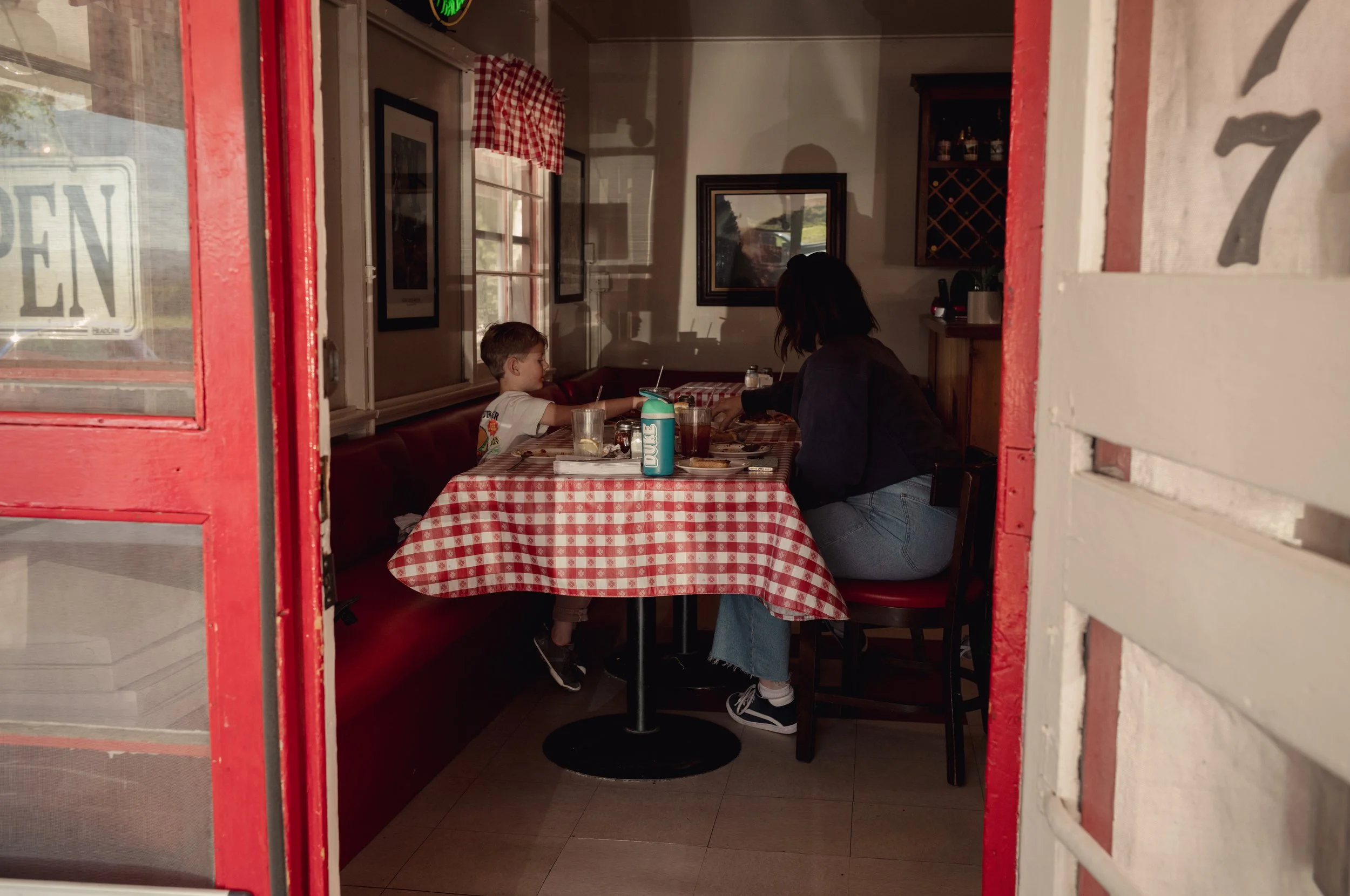
And sometimes, it’s just a table.
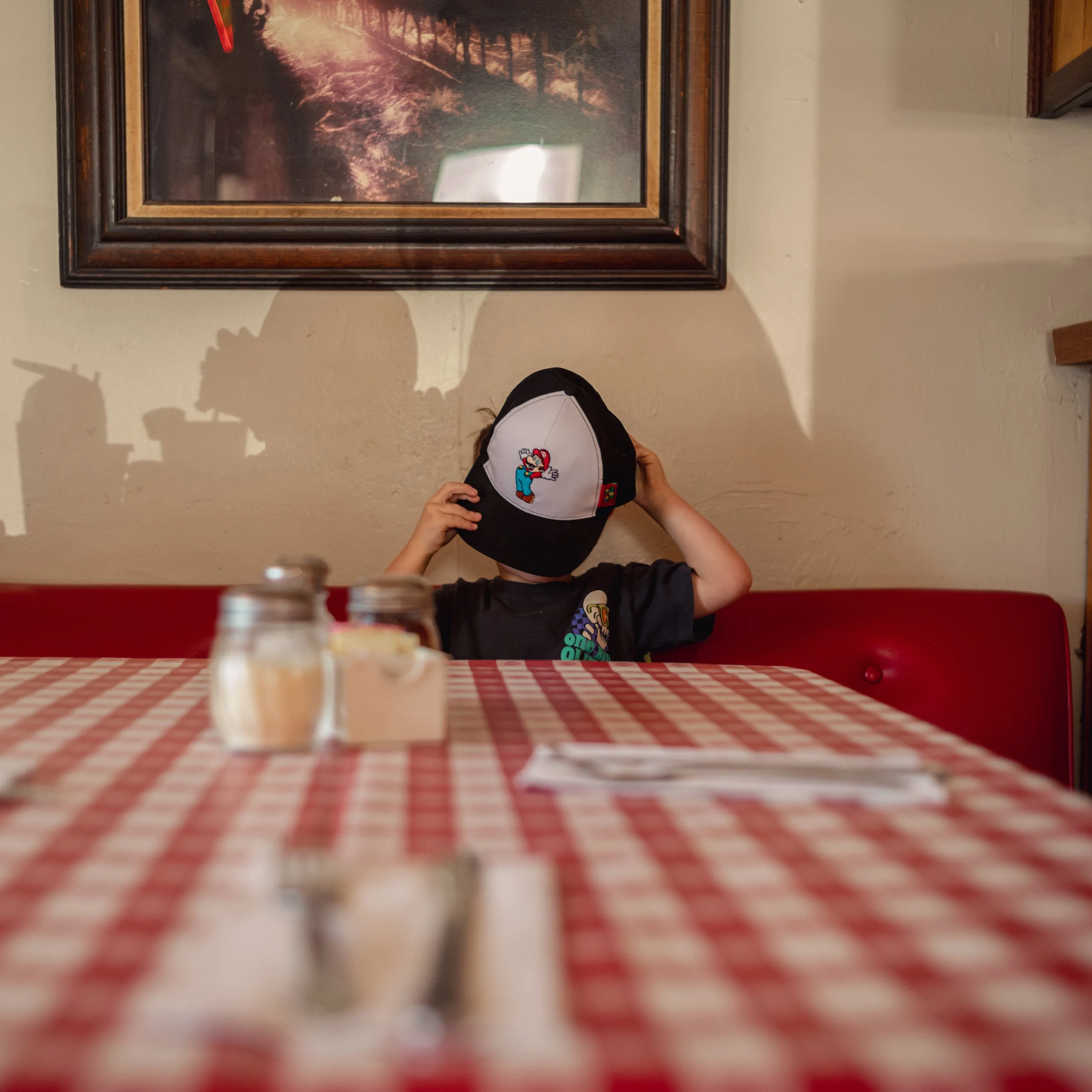
I remember sitting across from one of them, not that long ago.
He had already finished eating.
I was still halfway through mine.
And you could see it—the pull to get up, to move, to go find something else more interesting than sitting there with me.
He shifted.
Looked past me.
Started to slide out of the booth.
“Sit,” I said, not sharp, just steady.
Not as a command. As a reminder.
Stay with me.
The details change depending on the child.
That’s part of the point.
Because what we’re really trying to teach them is not just how to sit across from someone—
but how to think about the person sitting there.
What they might enjoy.
What would make them feel seen.
What kind of time would feel like it was chosen for them.
From the outside, it can look like a simple outing.
But for a child, it’s a kind of practice.
To stay in the conversation.
To listen when they’d rather talk.
To ask questions that aren’t about themselves.
To resist the quiet urge to leave the moment the second it stops entertaining them.
We don’t give speeches about this.
We’re not raising diplomats.
We just keep showing up.
Different tables. Different days. Different children.
Letting them feel the weight of it in real time.
And slowly, over time, they begin to understand something we could never quite put into words:
That being with someone is one thing.
But learning how to be for them—
to sit, to stay, to pay attention even when it would be easier not to—
is a skill.
And like anything worth having,
it’s learned the slow way.
Across a table,
long after they’ve finished eating.
The Quiet Promotion
Tiny freedoms handed over one careful inch at a time
Some childhood promotions happen quietly.
There comes a moment when the job changes.
Yesterday you were holding their hand in line.
Today you’re sitting in the car while they walk through the door alone, clutching the folded bill you handed them in the parking lot.
The baby is asleep in the back seat, the soft rhythm of breathing filling the quiet space of the car.
The instructions are simple.
Go in.
Order the donuts we talked about.
Come right back out.
We’ve already reviewed the plan in the car.
What to say.
How many donuts.
Where to stand.
It’s not a complicated job.
But it is a new one.
Inside the shop, adults are ordering coffee and moving through the morning like they always do. Behind the counter someone slides pink boxes across the glass with the quiet efficiency of a place that has done this a thousand times before.
From the parking lot you can see them through the window, shifting their weight from one foot to the other, rehearsing the order quietly to themselves.
When their turn comes, they stretch up slightly toward the counter and place the folded bill down with a seriousness usually reserved for much larger transactions.
You try not to stare too obviously.
Parents learn early that too much watching can make a child suddenly unsure of themselves.
So you glance down at the sleeping baby, then back toward the window just in time to see the exchange happen.
Money.
Donuts.
A box.
Then the door opens again.
They emerge carrying the prize — a pink donut box held carefully in both hands like something important.
Mission accomplished.
Mostly.
Because when the lid opens in the car, there are… a few more donuts than originally discussed.
The job was done.
Technically.
But childhood negotiations with pastries are complicated things.
Still, the important part happened.
Money changed hands.
An order was placed.
A small promise was kept.
Which, in the grand hierarchy of childhood responsibilities, ranks somewhere between remembering your library book and not losing the house key.
But it matters.
Because somewhere along the way, a child receives a quiet promotion.
A little more responsibility.
A little more trust.
Not with speeches or ceremony.
Just a folded bill in their pocket,
and a pink donut box carried carefully out the door.
With, as it turns out,
a few extra donuts inside.
Which is exactly the sort of executive decision you might expect from someone newly promoted.
The Act of Noticing
Children learn what matters by watching what we pause for
Most mornings in our house begin slowly.
My oldest usually makes it downstairs first and enjoys a few quiet minutes of full authority over the television and the remote before anyone else can weigh in.
Not long after, my middle follows.
One of his responsibilities now is turning on the coffee when he heads downstairs.
The house is still waking up at that point.
The dogs stretch.
Someone wanders into the kitchen half awake.
And the smell of coffee begins working its way through the house.
Children don’t realize it yet, but they’re already learning one of the most important skills a home can teach.
The quiet act of noticing.
Noticing flowers growing along a sidewalk.
Noticing when a brother suddenly goes quiet.
Noticing when the dog has been pacing by the door long before anyone else realizes he needs to go out.
Or noticing that the trash is full — a detail that somehow escapes everyone’s attention until it can no longer be politely ignored.
Children don’t start out noticing much beyond their own world.
They notice hunger.
Excitement.
The toy someone else is holding.
They do not, for example, notice the dog pacing by the door, the laundry multiplying in the hallway, or the fact that someone has already asked them three times to put their shoes away.
But slowly their awareness begins to widen.
They begin to see other people.
Noticing that someone else is nervous even when they themselves are excited.
Noticing when a sibling suddenly grows quiet.
Noticing when something small needs doing before someone has to ask.
These things seem small.
But they are the beginning of social awareness.
You can’t care about what you don’t notice.
When I think about where I learned this skill, I realize it was the women in my life who taught me first.
My grandmother helping my mother around the house — because with seven children there was always something that needed doing.
My mother somehow remembering each of our small preferences — favorite chocolate bars, how we liked our eggs in the morning.
My sisters noticing when I wore a new shirt or did my hair differently.
Little acknowledgments that quietly said:
I see you.
Later I began to notice the same skill in my husband.
Sometimes he notices a shift in my mood before I’ve even decided what my mood is.
It usually begins with a joke — the kind that makes the boys laugh just enough to break whatever storm cloud was gathering in the room.
And then, almost casually, he steps in and changes the energy of the moment.
Redirecting the boys.
Lightening the atmosphere.
Restoring the rhythm of the house.
Noticing isn’t only a kind of care carried by women.
Men have an enormous role in it too.
Children are always watching.
They watch how adults read a room.
How they respond to someone’s frustration.
How they quietly step in when something needs tending.
And slowly, almost without realizing it, they begin to do the same.
In our house there is also a lot of coffee talk.
One sip before questions begin.
Asking for a warm-up halfway through the morning.
Stopping for coffee before an errand.
The boys notice this.
They also occasionally ask for a sip.
My husband takes his black, which usually leads to immediate regret.
Mine is creamy with just a touch of sweetness, which makes them curious enough to try again.
And when my mother-in-law visits, she takes her coffee about eighty percent cream and twenty percent coffee — which the boys have correctly identified as essentially dessert.
Children notice rituals long before they understand them.
The hope is that one day they will move through the world noticing the people around them.
Noticing when someone feels nervous.
Noticing when someone needs help.
Noticing the small things that make a person feel seen.
And maybe someday, many years from now, one of them will hand his wife a cup of coffee.
Made exactly the way she likes it.
Not because she asked.
Just because he noticed.
Which, when you think about it, is how most good relationships begin.
The Boys’ Room
Boyhood, in close quarters
Childhood leaves evidence everywhere.
Two twin beds sit a few feet apart in the boys’ room, each with the same green-and-white quilt—though they rarely stay neatly folded for long.
By the end of most days the floor is scattered with toy cars, socks, and the small debris of childhood.
Lamps glow on either side of the beds, and sometime after the lights go out the whispering begins.
The boys share this room.
And without realizing it, they’re learning something important here: how to live with another person.
Before the lights go out we usually read for a while.
Some nights we’re laughing our way through Frog and Toad. Other nights the room grows quiet as we slowly make our way through Harry Potter, or take a quick adventure with the Magic Tree House before closing the book.
Of course, this all sounds very peaceful when written down.
In reality there are usually at least three interruptions, someone suddenly remembering a critical detail from earlier in the day, and a last-minute negotiation over who gets to choose the book that night.
But eventually the story ends.
Before turning out the lights I ask them one last question.
“Tell me the three best parts of your day.”
Sometimes the answers are small: a good recess game, a funny moment at dinner, a Lego creation that finally worked.
Other nights they think a little longer before answering.
It’s a simple habit, but it sends them to sleep looking back over the day for the good in it before letting it go.
Some nights, when I’m trying to muscle through the final meltdown of the day, I glance up at the sign on their wall that reads These Are the Good Old Days and remember—somewhat inconveniently—that it’s telling the truth.
Then the lamps click off.
And the whispering begins.
In that small room, between the twin beds and the quiet negotiations that happen after dark, the boys are learning something that’s hard to teach directly.
Sharing a room means learning that another person exists beside you—with their own blankets, their own books, and their own need for quiet when you’d rather keep talking.
Some nights that lesson lands gently.
Other nights it arrives a little louder.
But either way, the boys are slowly learning the small diplomacy of sharing a life.
Modern homes often assume that children should each have their own rooms, their own private corners of the house.
And one day the boys probably will.
But for now there’s something quietly valuable about this shared space.
In this room they’re learning patience, compromise, and the simple awareness that comfort belongs to more than just themselves.
Years from now they’ll have their own rooms, their own homes, their own lives that stretch far beyond this one small space.
But for now there are two twin beds, a floor scattered with the remains of the day’s adventures, and the low murmur of voices long after the lamps are switched off.
And somewhere in that quiet room, long after bedtime, the whispering continues.
The Culture of a Table
Long before it feeds people, a table teaches them how to gather
The culture of a home is built in small rituals repeated every day.
There is a particular moment in the late afternoon when the house begins its quiet shift toward evening.
The light softens. The kitchen starts making its familiar sounds again. And the dining table—so recently abandoned to the debris of the day—begins its slow transformation.
A bowl pushed aside.
School papers stacked.
Crayons returned to their jar.
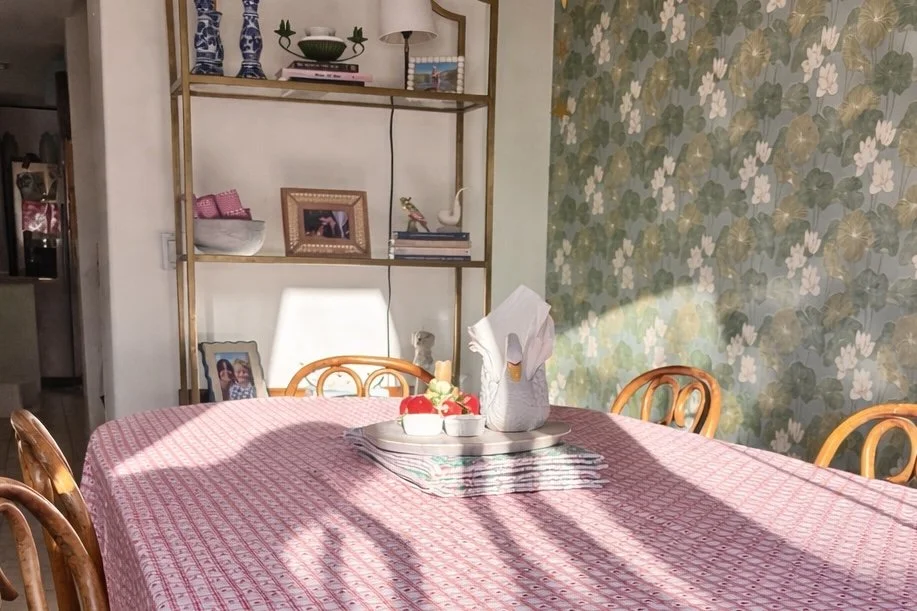
Soon enough it will be a dinner table again.
In our home, the table may be the most faithful object we own. It asks very little of us, yet bears witness to nearly everything.
Quick breakfasts before school.
The chaos of afternoon crafts.
A loaf of bread cooling on the counter while someone inevitably tears off a piece before it’s ready.
It is constant, and yet it is never the same twice.
Ours sits beneath cheerful wallpaper that wasn’t designed with three boys in mind. Some days there’s a bright tablecloth spread across it. Other days it’s bare except for the remains of the afternoon— paper chain scraps, crayons rolling toward the edge, someone’s forgotten glass of milk.
The table is where life gathers in small layers.
Jam on a sleeve. Someone talking with their mouth full. Another trying to remember if they’re supposed to keep elbows off the table — or if that rule has quietly disappeared somewhere along the way.
Culture, I’ve come to believe, isn’t something distant or grand. It’s something practiced quietly in ordinary places—most often around a table.
A cultured home isn’t a perfect home. It’s just a home where everyday life is handled with a little care.
Candles lit even when dinner is simple. Napkins unfolded even if someone spills immediately.
Children expected to participate, though they are still very much allowed to be children. It isn’t refinement for refinement’s sake.
It’s practice—gentle practice—in how to live with other people.
For a long time, the table was where these lessons unfolded naturally.
Children watched adults pass dishes before serving themselves. They learned that meals belonged to everyone gathered there, not just the one who cooked them.
Somewhere along the way, many of us lost that rhythm.
Modern life scatters people into separate corners.
Meals eaten quickly. Plates balanced on laps.
A quiet feeling that we’re all doing our best, but maybe missing something we can’t quite name. People often say raising children used to take a village.
And it did.
But villages weren’t just neighbors and grandparents.
They were tables.
Places where stories were told often enough to become family history. Where guests showed up with very little notice and somehow there was always room.
Where children sat nearby, listening to conversations that weren’t entirely meant for them until one day they realized they had grown into them.
These days, many of us live without that kind of village.
But the hopeful thing is that villages aren’t only something we inherit.
Sometimes they’re something we build.
Often it begins with a table.
Not a particularly grand one. Not even a tidy one most days. Just a place people gather regularly enough that it starts to mean something.
In our house, the table changes its purpose several times before the day is done. In the morning it holds bowls of cereal and the urgency of getting everyone out the door. By midday it may be buried in pencils, spelling worksheets, or whatever paper creation someone has decided must immediately hang from the ceiling. By evening, it gathers us back together again.
There are three boys at our table, each arriving with a story they’re determined to tell first. No one is quietly listening. Everyone is talking at once. Someone is halfway out of their chair reenacting something that happened earlier that day.
Bread disappears quickly.
Milk occasionally spills.
And somehow dinner still happens.
Some nights feel almost ceremonial. Candles lit. Plates passed. A moment where the day settles down and everyone seems content to linger a little longer. Other nights are louder. Someone refuses vegetables with great conviction. Someone else insists they’ve already eaten enough after three bites.
Both count.
Because culture in a home isn’t built from perfection. It’s built from repetition. From the simple act of showing up again tomorrow. Over time, the table begins to hold something larger than the meals themselves. It becomes a quiet record of a family’s life. Birthdays celebrated. Bad days softened with soup and bread. Conversations that stretch long past the last plate being cleared.
Years from now, my children probably won’t remember much of what was actually served here. But I suspect they’ll remember the feeling of it. The light above the table. The sound of chairs scraping across the floor. The sense that everyone belonged in the same place.
And maybe that’s the real work of a table.
Not just feeding the people who gather there, but quietly shaping the kind of homes they’ll one day build themselves.