The House Loaf
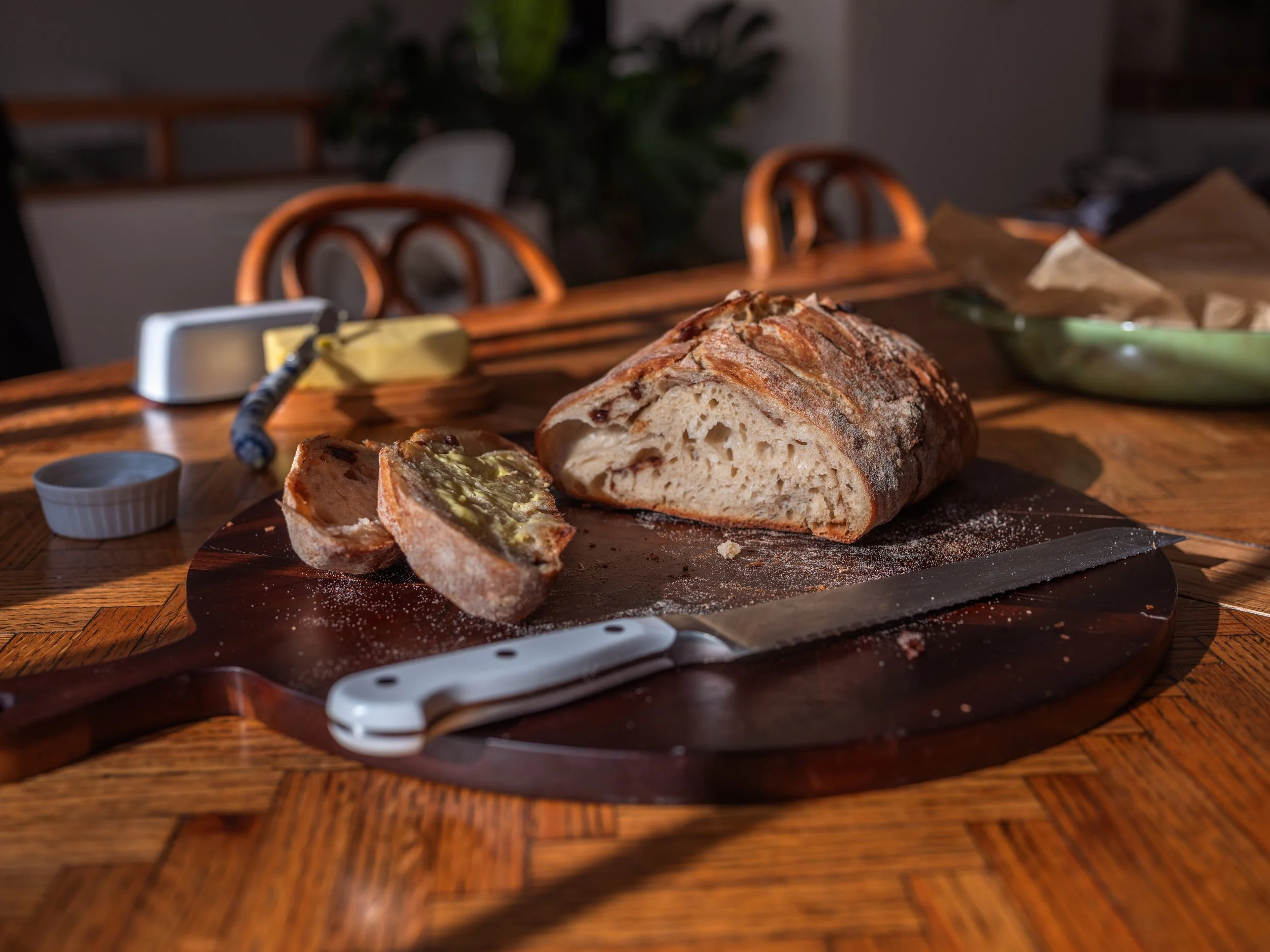
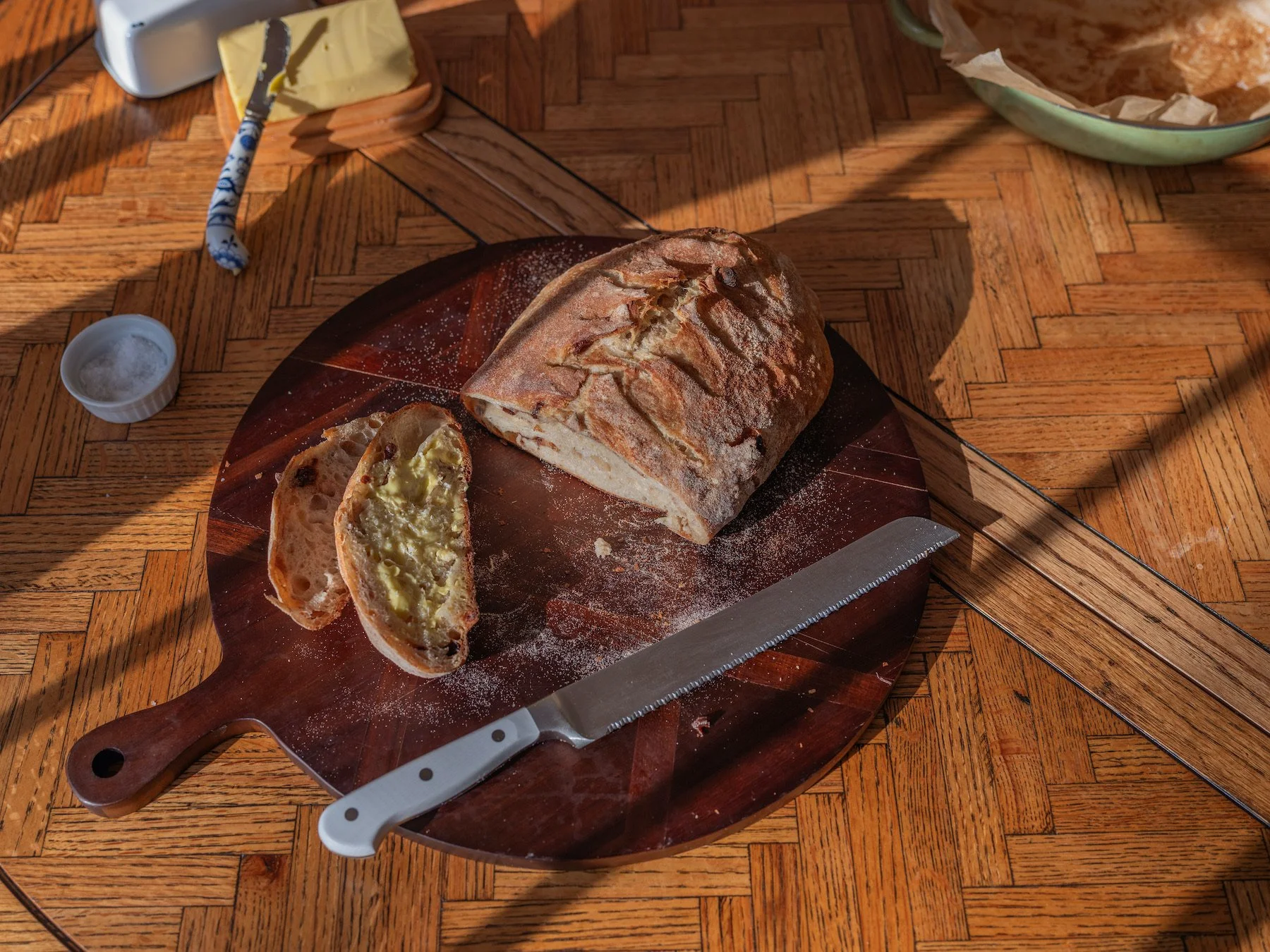
This is the loaf that usually waits on our table — sometimes sliced neatly, more often torn into before it has properly cooled. It’s the bread I referenced in The Culture of a Table, the one that seems to appear whenever people gather.
⸻
Ingredients
(Makes two loaves)
Leaven
200 g warm water
200 g bread flour
1 tablespoon active sourdough starter
Dough
700 g warm water
200 g leaven
900 g bread flour
100 g whole wheat flour
20 g fine sea salt
⸻
The Night Before
In a bowl, stir together the starter, warm water, and bread flour for the leaven.
Cover loosely and leave at room temperature overnight.
By morning it should look airy and full of bubbles.
⸻
In the Morning
In a large bowl combine:
700 g warm water
200 g leaven
Stir gently to dissolve the leaven in the water.
Add the bread flour and whole wheat flour. Mix until no dry bits remain and a rough dough forms. Cover and let rest for 30 minutes.
⸻
Add the Salt
Sprinkle the salt over the dough and add a small splash of warm water.
Work it in by squeezing and folding the dough until the salt disappears into it.
⸻
Bulk Fermentation
Let the dough rise at room temperature for 3–4 hours.
During the first two hours, give the dough a fold every 30 minutes:
Lift one side of the dough and fold it back over itself. Turn the bowl and repeat until you’ve gone all the way around.
With each fold the dough will become smoother and stronger.
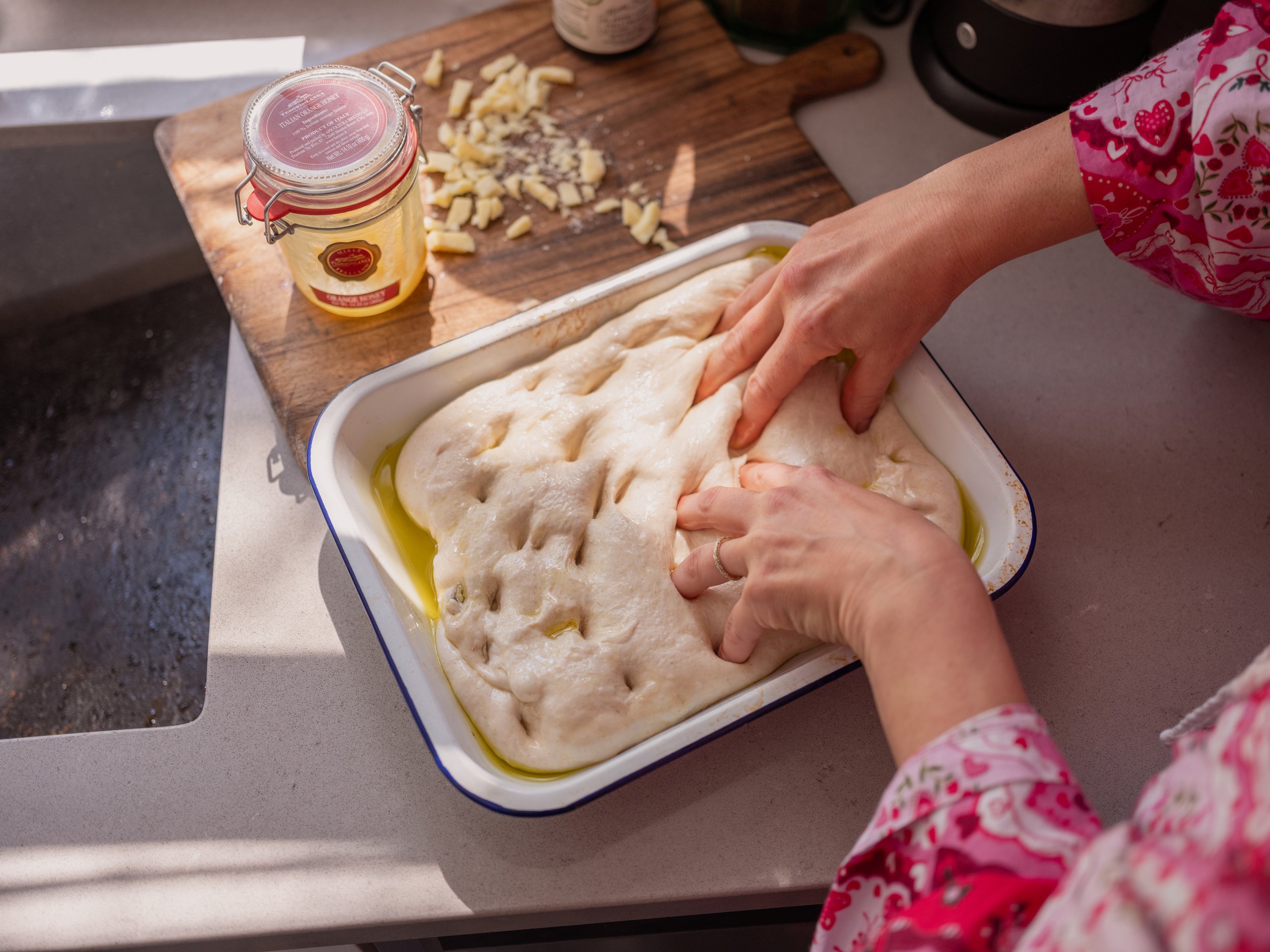
At this point, the dough could be just as easily become focaccia— pressed into a pan, dimpled with oil, and whatever the season calls for.
⸻
Divide and Rest
Turn the dough out onto a lightly floured surface.
Divide it into two pieces and shape each into a loose round. Let them rest for 20–30 minutes.
⸻
Shape
Shape the dough into rounds or long loaves and place them seam-side up into well-floured bannetons, or bowls lined with floured kitchen towels.
⸻
Final Rise
Let the loaves rise for 3–4 hours at room temperature,
or refrigerate overnight for a slower rise and deeper flavor.
⸻
Bake
Place a Dutch oven in the oven and preheat to 500°F.
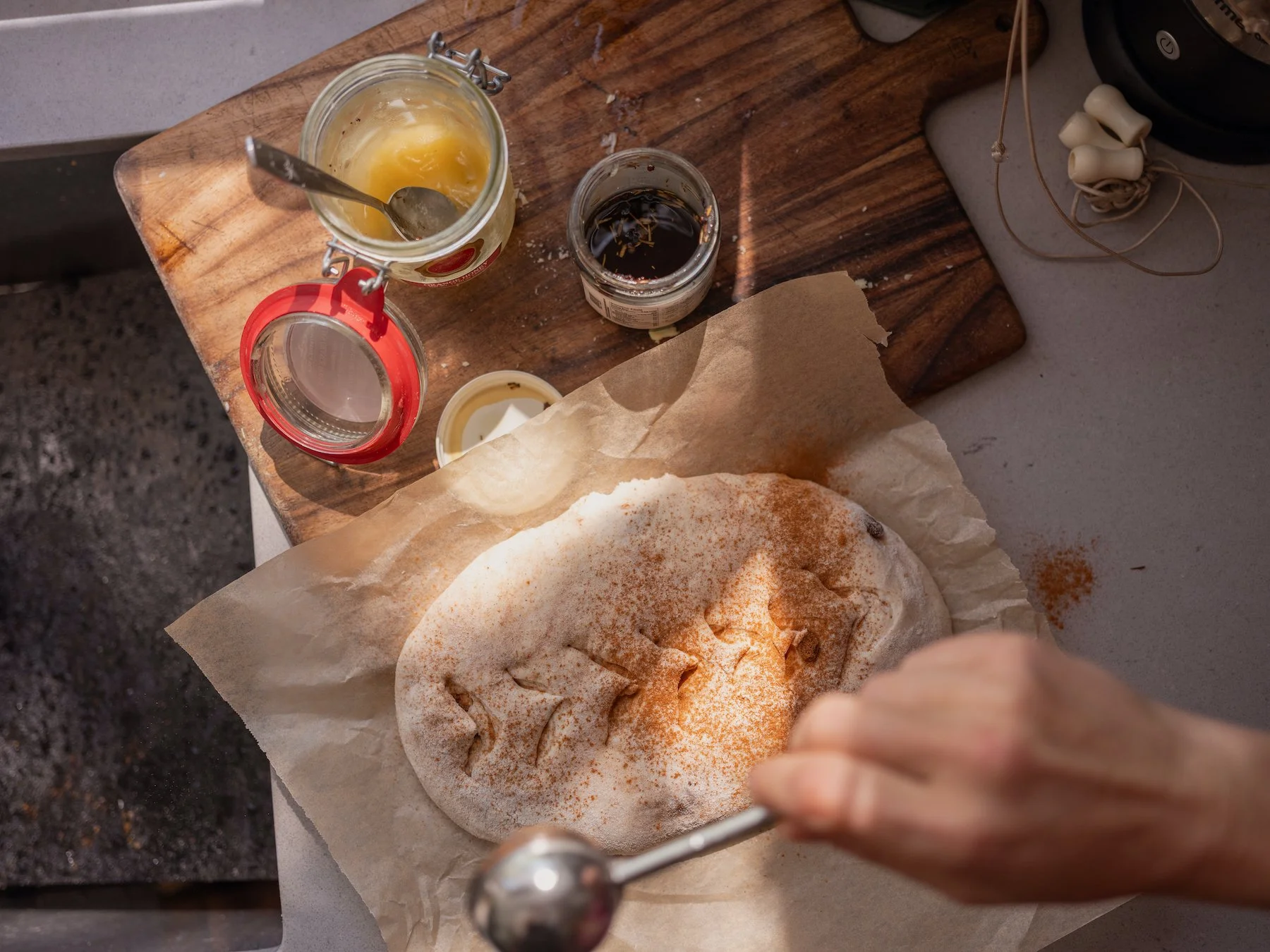
Turn a loaf onto parchment and score the top.
Bake:
20 minutes covered
20–25 minutes uncovered at 450°F
The crust should be deeply golden and sound hollow when tapped.
Let the loaf cool before slicing — though in our kitchen it is usually torn into long before that.
⸻
From the Kitchen
This is the bread we make most often.
It shows up beside soups, under soft eggs in the morning, and in thick slices the next day for toast.
More often than not, it arrives at the table still warm.